
Artifacts
The Frank and Virginia Williams Collection of Lincolniana consists of approximately 12,000 artifacts, statuary, prints, paintings, broadsides, ephemera, photographs, philately, collectibles/miniatures, and numismatics. Materials are housed in 20 map case drawers, 30 cartons, and a variety of loose statuary, prints, and paintings. The collection also includes nearly 100 original manuscripts and the Claude Simmons collection which consists of approximately 12 bankers boxes of Lincoln related materials and scrapbooks. There are also approximately 15,000 books, journals, and pamphlets separated into two collections: the Lincoln Book Collection and the Civil War/Collateral Book Collection.
-
Steel Engraved print featuring a portrait of William H. Seward
Virtue & Yorston
An oval shaped portrait of William H. Seward. The print is ornately decorated with numerous fleurs-de-lis. published by Virtue & Yorston (British, ca. 1859?-1890s?)
-
Lincoln Statue at Lincoln Park in Chicago, Illinois
V.O. Hammon Publishing Company
This postcard features the Abraham Lincoln statue at Lincoln Park in Chicago, Illinois. Abraham Lincoln is shown standing.
-
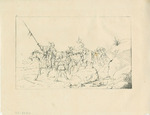
Albert S. Johnston Crossing the Desert to Join the Southern Army (from Confederate War Etchings)
Adalbert John Volck
The etching depicts Albert S. Johnston crossing a desert terrain on foot. With him are horses, loafers, and a Native American guide. The image takes place after Johnston resigned from his position in the Federal Army to join the Confederacy.
-
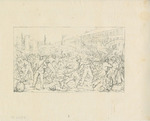
Battle in Baltimore, April 19th, 1861 (from Confederate War Etchings)
Adalbert John Volck
The etching depicts the Baltimore Riot of 1861, when Confederate sympathizers attacked the 6th Massachusetts Militia as they marched en route to Washington D.C.
-
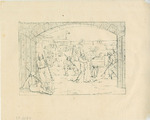
Butler's Victims of Fort St. Philip (from Confederate War Etchings)
Adalbert John Volck
The etching depicts high-standing citizens of New Orleans shackled and completing hard labor. These prisoners are guarded by an African-American Zouave unit, and members are shown pointing and mocking the prisoners. General Benjamin Butler, - who along with Admiral David Farragut captured Fort St. Philip in April 1862 - is shown escorting two women in the image.
-
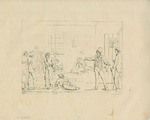
Buying a Substitute in the North during the War (from Confederate War Etchings)
Adalbert John Volck
Volck's image is a negative comment on the Northern practice of permitting men to replace them in the draft. The image depicts well-dressed man admitting another man into a public house where substitutes are for sale. The entryway door has a sign posted that states substitutes are for sale and indicates that they are "ablebodied men." The substitutes include lower-class men, including black individuals. In the background hangs an "Honest Abe" poster.
-
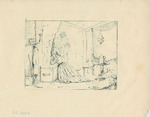
Cave Life in Vicksburg during the Siege (from Confederate War Etchings)
Adalbert John Volck
The etching references the usage of caves as shelters during the siege of Vicksburg in 1863. In the image, a woman kneels in prayer inside of a cave. Domestic items surround her including a broom, ottoman, silver, and trunk. A bed is situated in the far right corner.
-
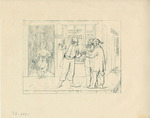
Counterfeit Confederate Notes Publicly Offered for Sale in the City of Brotherly Love (from Confederate War Etchings)
Adalbert John Volck
The etching depicts three men standing outside of a Broker's Office holding paper currency. They appear to be dressed in different military uniforms. A fourth man in gentleman's attire stands in the doorway of the busy office.
-
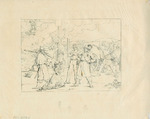
Dat Fite Mit Siegel (from Confederate War Etchings)
Adalbert John Volck
Volck's image depicts a burning house. Two children are shown trapped on the house's roof. Union soldiers stand outside, while a women shown begging on her knees pleas with the officers. A soldier stands behind her with his hands holding the ties of her torn corset. A man, dressed in strange attire, stands the the right of the image and points a gun at the children on the roof. Amid the chaos, an American flag waves in the scene.
-
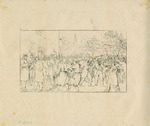
Election in Baltimore, November 1862 (from Confederate War Etchings)
Adalbert John Volck
The image shows Federal troops facilitating an election. The troops are shown encouraging lower-class voters, while intimidating those of the more respectable class. Many Union sympathizers within the crowd hold signs, and Baltimore's George Washington Monument may be seen in the background.
-
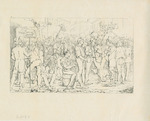
Enlistment of Sickles' Brigade (from Confederate War Etchings)
Adalbert John Volck
The image satirically depicts the Sickle's Brigade, a disreputable group of men who were (allegedly) recruited for the Excelsior brigade by Colonel Daniel Sickles. A crowd of men stand in a street holding signs or weapons.
-
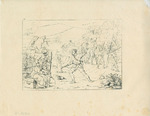
Formation of Guerrilla Bands (from Confederate War Etchings)
Adalbert John Volck
The etching depicts a farmer, his wife, and child outside of their home that has been destroyed by Union forces. An angry man stands at the center of the image and attempts to persuade the farmer to join the guerrilla band (pictured in the background) to seek out revenge on the offenders. The band in the background carry a banner.
-
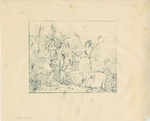
Free Negroes in Hayti (from Confederate War Etchings)
Adalbert John Volck
The etching attempts to capture Volck's belief that Haitian people of African-decent were predisposed to an inherent violent nature. The scene depicts a ritual where an infant is sacrificed on a rock. Its head appears on a spear as a drum and tambourine are played. In the back ground, men and women are eating. One man appears to be eating a human arm.
-
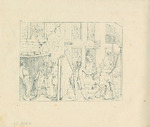
Free Negroes in the North (from Confederate War Etchings)
Adalbert John Volck
The etching captures Volck's stance on the North's hypocrisy toward the treatment of black individuals. The scene takes place on Lovely Lane outside of a building where dancing and fighting takes place. The etching also depicts a well-dressed man assumed to be Henry Ward Beecher (a pastor and abolitionist) who denies help to a beggar in the streets. Instead, he hands the beggar a religious tract. Also pictured are two black men who are grave robbers. A wealthy-looking white man pays them for a corpse.
-
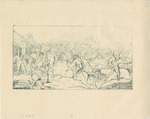
Gen'l Stuart's Raid to the White House (from Confederate War Etchings)
Adalbert John Volck
The etching depicts J.E.B. Stuart's cavalry conducting a raid. The Confederate horsemen are shown shooting Union soldiers, removing an American flag, and harassing the owner of an alehouse. J.E.B. Stuart's cavalry on a raid; much chaos as the mounted Confederates shoot Union soldiers, tear down the Union flag and harass a ""Hezekiah Skinflint"" who runs an alehouse.
-
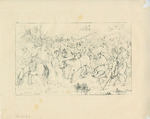
Gen'l Stuart's Return from Pennsylvania (from Confederate War Etchings)
Adalbert John Volck
The etching depicts General J.E.B. Stuart's cavalrymen and horses resting. In October 1862, this cavalry division conducted raiding stops in Pennsylvania, which resulted in the cavalry confiscating horses and hats, as depicted in the image.
-
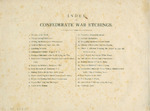
Index to Confederate War Etchings
Adalbert John Volck
The index lists the titles of all 29 etchings appearing in the Confederate War Etchings illustrative series.
-
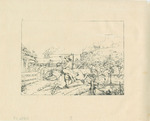
Jamison's Jayhawkers (from Confederate War Etchings)
Adalbert John Volck
In the image Charles ""Doc"" Jennison, the leader of the 7th Kansas Volunteer Cavalry, (i.e., Jennison's Jayhawkers) is shown leading a raid on a Confederate sympathizer's home. Men are shown burning structures, stealing animals, shooting inhabitants. Jennison is shown riding a horse with a bare-breasted woman slung across his saddle. The image is meant to showcase the brutality of the Union Jayhawkers.
-
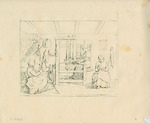
Making Clothes for the Boys in the Army (from Confederate War Etchings)
Adalbert John Volck
The etching depicts a domestic, patriotic scene where three Southern women make clothing in a small bedroom. It is intended to show the sacrifice women made on behalf of the war effort. One woman creates thread from raw material. Another weaves the thread into cloth. The third woman sews the material into garments to be worn by Confederate soldiers.
-
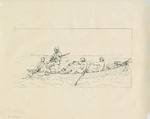
Marylanders Crossing to Potomac to Join the Southern Army (from Confederate War Etchings)
Adalbert John Volck
Maryland, Volck's adopted state, was a border state during the American Civil War. The Potomac River served as a physical barrier between the Union and Confederacy, which is depicted in the etching.
-
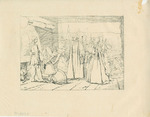
Offering of Bells to be Cast into Cannon (from Confederate War Etchings)
Adalbert John Volck
The print shows pastors offering their church bells to be melted and used as raw materials for war weapons. A slave is shown in the foreground unloading a bell at the feet of a Confederate officer. Appearing in the lower left corner of the image are two sets of initials, EBM and AJV, the latter belonging to Volck. This is one of the only etchings showcasing Volck's initials.
-
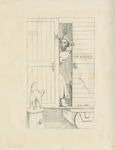
Passage through Baltimore (from Confederate War Etchings)
Adalbert John Volck
In the print, Volck criticizes Abraham Lincoln for making the trip to his 1861 inauguration in secret. At the time, there were rumors of an assassination plot brewing in Baltimore, and Lincoln was encourage to travel in secret at night, advice that Lincoln reluctantly took and later regretted.
-
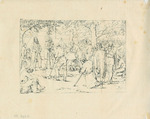
Prayer in Stonewall Jackson's Camp (from Confederate War Etchings)
Adalbert John Volck
The etching depicts Stonewall Jackson delivering a sermon in a Confederate army camp. A group of Confederate servicemen, including an African-American man, kneel in prayer around him. According to the Gilder Lehrman Institute of American History, Volck created the etching from his sketch of this event at Ball's Bluff in Virginia.
-
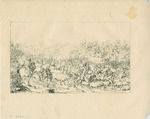
Return of a Raiding Party from Pennsylvania (from Confederate War Etchings)
Adalbert John Volck
In the etching, the results of a Confederate cavalry raid are shown. The raid was apparently successful because soldiers are shown leading several heads of livestock, including cattle and pigs. A wagon train is also shown in the background.
-
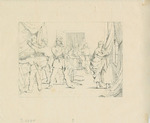
Searching for Arms (from Confederate War Etchings)
Adalbert John Volck
The image depicts Union soldiers searching a bedroom for Confederate weapons. A woman and child stand to the side of a room as two soldiers look beneath a bed mattress. Two other soldiers stand in the background, fending off a man in nightclothes. A fifth soldier stands in the middle of the room looking at the woman and child. He is holding a Union flag in his proper left hand and pointing at it with his proper right hand.
-
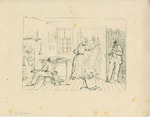
Slaves Concealing Their Master from a Search Party (from Confederate War Etchings)
Adalbert John Volck
The etching shows the inside of a slave quarter where a female slave stands at a door in front of a group of Union soldiers. The woman points to the right to lead the soldiers in the opposite of the slave master, who is hiding in the room behind a door. A gun is in his hands. A dog is also shown in the doorway. A chair lays overturned in the center of the room. A man and child sit in front of a fireplace. The man prepares food, while the child clings to him in apparent distress.
-
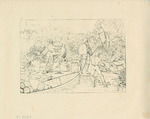
Smuggling Medicines into the South (from Confederate War Etchings)
Adalbert John Volck
The image depicts a group of four men (civilian and military) unloading medical supplies from a small boat. A fifth man, dressed in gentlemanly attire, is shown climbing down from a tree perch. Volck, who was a Confederate sympathizer, actively took part in similar efforts to smuggle medical supplies across the Potomac River.
-
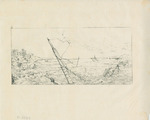
Stone Blockade of Charleston, S.C. (from Confederate War Etchings)
Adalbert John Volck
Volck's etching depicts the route leading to Charleston Harbor. In the image, several sunken ships are shown.
-
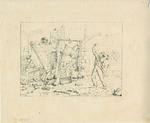
Tracks of the Armies (from Confederate War Etchings)
Adalbert John Volck
The image shows a Confederate soldier returning to his destroyed home. His lifeless wife is shown naked along with a deceased dog. While not explicit, it is implied that Union soldiers carried out the destruction.
-
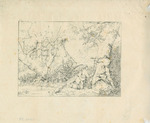
Vicksburg Canal (from Confederate War Etchings)
Adalbert John Volck
The etching depicts a scene where Confederate watch from a distance as Union troops construct a canal near Vicksburg in 1862-1863
-
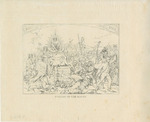
Worship of the North (from Confederate War Etchings)
Adalbert John Volck
In the etching, Volck criticizes the Union cause by depicting several key people gathered around an altar performing a ritual, literally built upon Negro Worship, Free Love, Witchburning, Socialism, Atheism, Rationalism, and Puritanism. Well-known individuals depicted include a devil-like Abraham Lincoln, Henry Ward Beecher, Horace Greely, and Charles Sumner. A crowd of Union sympathizers look on at the ritual. A group of representatives from the Holy Cause of the Contractors stand in the far distance of the image, representing the Confederacy's belief that the North was profiting off of the war on the South.
-
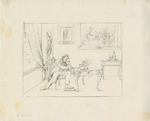
Writing the Emancipation Proclamation (from Confederate War Etchings)
Adalbert John Volck
The etching depicts Abraham Lincoln drafting the Emancipation Proclamation and appears to be in cohorts with the devil. The proclamation, which was signed on January 1, 1863, freed all slaves in Confederate states. Also depicted is a portrait of John Brown, a radical abolitionist, hanging on Lincoln's wall.
-
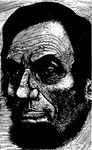
Abraham Lincoln
Douglas Volk, New York Graphic Society, and Mellon Collection at the National Gallery of Art
Color reproduction of painted right side bust portrait of Abraham Lincoln by Douglas Volk.
-
Bronze Figures on Lincoln Monument at Oakridge Cemetery in Springfield, Illinois
VO Mammon Publishing Company
This postcard features a bronze Abraham Lincoln monument in Springfield, Illinois.
-
Bronze Figures on Lincoln Monument in Oak Ridge Cemetery in Springfield, Illinois
VO Mammon Publishing Company
This postcard features a bronze Abraham Lincoln monument in Springfield, Illinois.
-
Lincoln Monument, Springfield, Illinois
VO Mammon Publishing Company
This postcard features the Abraham Lincoln monument in Springfield, Illinois.
-
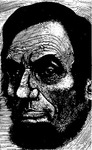
24 Rare Lincoln Commemorative Prints
Phillip H. Wagner and Lloyd Ostendorf
A set of twenty-four Lloyd Ostendorf prints featuring artwork depicting the life of Abraham Lincoln. The prints are enclosed in an illustrated envelope that bears the signature of Lloyd Ostendorf.
-
The Old Abe Lincoln Court House, Decatur, Illinois
Wait Cahill Company (American)
This card features the Old Abe Lincoln Log Court House in Decatur, Illinois.
-
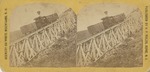
Scenery on White Mountains, N. H.
H. P. Wales
The stereograph features a black and white image of a railway located in the White Mountains in New Hampshire. In the image, a locomotive can be seen climbing the railway up the mountain. The image is mounted on a yellow card with rounded corners.
-
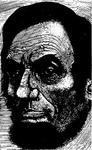
Boner's Ark
Addison Morton Walker
A negative photographic version of a comic strip featuring an Abraham Lincoln theme. Originally published in King Features Syndicate.
-
Boner's Ark
Addison Morton Walker
Features Cubcake telling Captain Boner, "I'm going to be Abraham Lincoln in the school play."
-
Following Abraham Lincoln
Bernhardt Wall
Etched announcement by Bernhardt Wall. Announcing work Following Abraham Lincoln.
-
The Presidents of the United States.
Joseph Ward
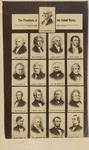
The CDV features composite photographs of the first 17 Presidents of the United States.
-
Lincoln and Tad Study a Brady Album
Joseph Ward and Anthony Berger
The carte de visite features a photograph of Abraham Lincoln and his son Tad Lincoln taken by Anthony Berger on 9 February 1864. The photograph is one of the more popular images of Lincoln and is one of the only to show the President wearing his spectacles. [Ref. O-93A.] In the photograph, Lincoln sits with Tad by his side and an album in his lap. The pair gaze down at the album.
-
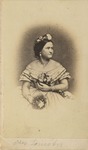
Seated Portrait of Mary Todd Lincoln
Joseph Ward and Mathew Brady
Photograph of an engraving or lithograph featuring a seated portrait of Mary Todd Lincoln. At bottom: [Ref: ML, O-16.]
-
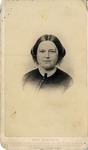
Vignette Portrait of Mary Todd Lincoln
Joseph Ward and William H. Mumler
Reproduction of an engraving or lithograph featuring a vignette bust portrait of Mary Todd Lincoln. [Ref: ML, O-7.]
-
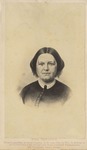
Vignette Portrait of Mary Todd Lincoln
Joseph Ward and William H. Mumler
Reproduction of an engraving or lithograph featuring a vignette bust portrait of Mary Todd Lincoln. [Ref: ML, O-7.]
-
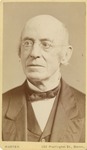
Portrait of William Lloyd Garrison
George K. Warren
The carte de visite features a bust-length portrait of William Lloyd Garrison, an American abolitionist.
-
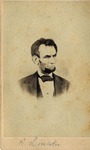
Bust-length Portrait of Abraham Lincoln
Henry F. Warren
Bust-length portrait of Abraham Lincoln. It is a variant of an original photograph by Henry F. Warren, taken 6 March 1865. [Ref: O-112.]
-
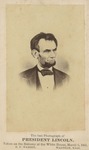
The Last Photograph of President Lincoln
Henry F. Warren
The carte-de-visite features a bust-length portrait of Abraham Lincoln, quarter-turned to his proper left. It is a variant of Henry F. Warren's photograph taken on 6 March 1865. It is the last photograph taken of Lincoln. [Ref: O-112.]
-
Catalog for the Folk Songs in American History Series
Warren Schloat Productions, Inc.
A catalog for the Folk Songs in American History Series produced by Warren Schloat Productions, Inc. The inside of the advertisement features portraits and short biographies of prominent Americans.
-
Catalogue-as-a-Glance, 1971
Warren Schloat Productions, Inc.
This advertisement is the Catalogue-as-a-Glance, 1971. The advertisement was produced by Warren Schloat Productions, Inc. The front of the advertisement features portraits of famous people; including, Dr. Martin Luther King jr. and others.
-
Portrait of Henry Ward Beecher
Warren's Photographic Studio
Bust length portrait of Henry Ward Beecher, congregationalist preacher and social reformer. Beecher was an advocate for abolition and women's suffrage.
-
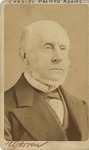
Portrait of Charles Francis Adams
Warren's Portraits
Black and white portrait photograph of Charles Francis Adams, United States Minister to the United Kingdom under Abraham Lincoln.
-
Lincoln Memorial, Aeroplane View in Washington, D.C.
Washington News Company and A. E. Matos
This postcard features an aerial view of the Lincoln Memorial in Washington D.C.
-
Lee’s Surrender- April 9, 1865
Washington Novelty, Inc. and Colourpicture Publishers, Inc.
This postcard features Ulysses S. Grant and Robert E. Lee. Robert E. Lee is shown reading the surrender terms at Appomattox.
-
Cavalry Eagle Cuff Links
Waterbury Button Company
Large Union Calvary Civil War buttons attached to cuff link backings. Their fronts feature an American bald eagle, whose shield bears the letter C. Reproduced by the original manufacturer, Waterbury Button Company.
-
Cavalry Eagle Large Button
Waterbury Button Company
One large Union Calvary Civil War button, struck in solid brass. Its front features an American bald eagle, whose shield bears the letter C. Reproduced by the original manufacturer, Waterbury Button Company.
-
Cavalry Eagle Small Button Set
Waterbury Button Company
Two small Union Calvary Civil War button, struck in solid brass. Their fronts feature an American bald eagle, whose shield bears the letter C. Reproduced by the original manufacturer, Waterbury Button Company.
-
Cavalry Eagle Stickpin
Waterbury Button Company
Small Union Calvary Civil War button attacked to a stickpin. Its front features an American bald eagle, whose shield bears the letter C. Reproduced by the original manufacturer, Waterbury Button Company.
-
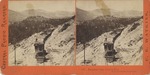
Emigrant Gap, looking East, Yuba Mountains in distance
Carleton E. Watkins
The stereograph features a black and white image of the Central Pacific Railroad, a route between Utah and California and the western portion of the Transcontinental Railway. In the image, a locomotive can be seen on the portion of the railroad known at the Emigrant Gap. The image is mounted to an orange card with rounded corners.
-
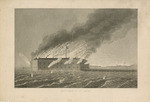
Bombardment of Fort Sumter
J. W. Watts
The black and white steel engraving features an image of Fort Sumter under attack. Smoke billows from its windows and top. Gun fire can be seen hitting the surrounding water. The engraving is printed in black in on white paper.
-
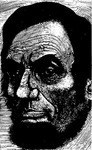
GENERAL ROBERT E. LEE leaving the McLean House after the Surrender, April 9, 1865.
Alfred R. Waud; Parks and History Association; and Museum Press, Inc.
Photolithograph; depicts Gen. Robert E. Lee leaving the McLean house following his surrender, April 9, 1865. After an eyewitness drawing done for Harper's by Alfred R. Waud. This version pub. by the Parks & History Assn., Washington, D.C.; "GENERAL ROBERT E. LEE leaving the McLean House/ after the Surrender, April 9, 1865." The image is made up with back line drawings against a beige background. General Robert E. Lee is depicted riding a horse. There is a second, unidentified solider, riding behind General Robert E. Lee. On the left side of the image, several soldiers are depicted as waving, saluting and watching General Robert E. Lee.
-
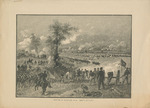
Battle of Malvern Hill -- Lee's attack
Alfred Rudolph Waud
The image depicts the Battle of Malvern Hill, which took place during the American Civil War on July 1, 1862. General Robert E. Lee stood command of the Confederate Army of Northern Virginia, while General George B. McClellan commanded the Union Army of Potomac. The two armies collided near Richmond, Virginia. The battle was a part of the Peninsula Campaign's Seven Days Battles. The image is printed in black ink on off-white paper. It appears to have been removed from a bound volume.
-
Thomas Jefferson Commemorative Medal (from Hall of Fame for Great Americans at New York University Medal Series)
Sidney B. Waugh, Medallic Art Company, and Hall of Fame for Great Americans
The medal's obverse design depicts the right-side profile of Thomas Jefferson, a United States founding father, principle author of the Declaration of Independence, and third President of the United States. On the reverse, a sword, quill, and compass are pictured. The three objects are encircled by a laurel wreath.
-
Tribute to the Great Emancipator
Harold Tucker Webster
Newspaper cartoon depicting two children listening to the radio.
-
Abraham Lincoln Round Sweet Dish
Wedgwood
The small sweet dish is blue in color and has an embossed left-facing profile image of Abraham Lincoln in white. Surrounding the dish's edge, an embossed leaf wreath is also included in white. The dish is enclosed in its original packaging with documentary information.
-
Rhode Island State Seal Sweet Dish
Wedgwood
The small sweet dish is blue in color and features the state seal of Rhode Island in white. Surrounding the dish's edge, a circle of embossed starts are also included in white.
-
William Ellery Channing Commemorative Medal (from Hall of Fame for Great Americans at New York University Medal Series)
Albert W. Weinman, Medallic Art Company, and Hall of Fame for Great Americans
The medal's obverse features the quarter left profile of William Ellery Channing, an American Unitarian preacher. A star is also depicted in the medal's background. On the reverse, a figure rests on a rock-like object as another figure stands in the background. Stars and a cloud are also pictured.
-
Charlotte Cushman Commemorative Medal (from Hall of Fame for Great Americans at New York University Medal Series)
Robert A. Weinman, Medallic Art Company, and Hall of Fame for Great Americans
The medal's obverse design features a bust portrait of Charlotte Cushman, an American stage actress well known for her wide vocal range and ability to play both male and female roles. On the medal's reverse, an image of Pegasus is displayed at the middle. Around the winged horse, Cushman is depicted in costume for four of her most well-known roles: Cordelia (King Lear), Lady Macbeth (Macbeth), Romeo (Romeo & Juliet), and Meg Merrilies (Guy Mannering).
-
Daniel Webster Commemorative Medal (from Hall of Fame for Great Americans at New York University Medal Series)
Robert A. Weinman, Medallic Art Company, and Hall of Fame for Great Americans
The medal's obverse design features a bust portrait of Daniel Webster, an American politician. The medal's reverse depicts five male figures. Four are dressed as various types of laborers, while the fifth is dressed in gentlemen's clothing. Above the men, an angel bearing a torch is pictured among stars.
-
Emma Willard Commemorative Medal (from Hall of Fame for Great Americans at New York University Medal Series)
Robert A. Weinman, Medallic Art Company, and Hall of Fame for Great Americans
The medal's obverse design depicts the right-side profile of Emma Willard, an American women's rights activist who founded the first school of higher education for women, Troy Female Seminary. The reverse pictures two women. One sits in a chair while holding a book. The other stands with her proper left hand on the seated woman's proper right shoulder. She draws back a curtain with her proper right hand. Behind the curtain, symbols for various educational disciplines are revealed, which include: celestial shapes, a globe and ship, a depiction of human anatomy, a soybean plant, and a frog.
-
James Buchanan Eads Commemorative Medal (from Hall of Fame for Great Americans at New York University Medal Series)
Robert A. Weinman, Medallic Art Company, and Hall of Fame for Great Americans
The medal's obverse design features a bust portrait of James Buchanan Eads, an American civil engineer and inventor who built the first road and rail bridge across the Mississippi in St. Louis. The reverse design depicts a merman whose legs, while separated, have fins instead of feet. The merman is submerged underwater and seems to be pushing his hands against two banks of a body of water, the Mississippi River.
-
James Madison Commemorative Medal (from Hall of Fame for Great Americans at New York University Medal Series)
Robert A. Weinman, Medallic Art Company, and Hall of Fame for Great Americans
The medal's obverse design depicts the left-side profile of James Madison, a founding father and fourth President of the United States. On the reverse, Madison is shown sitting at a desk. His proper right elbow rests casually on the back of his chair as his proper left arm rests on the desk. In his proper left hand, he holds a document. Nineteen stars circle the inner edge of the medal.
-
Roger Williams Commemorative Medal (from Hall of Fame for Great Americans at New York University Medal Series)
Robert A. Weinman, Medallic Art Company, and Hall of Fame for Great Americans
The medal's obverse features the left-side profile of Roger Williams, founder of Rhode Island and advocate for the separation of church and state. On the reverse, three men are pictured. One is older with a beard and stands holding a scroll. The second is Native American and stands with his arms stretched upward. The last is a man kneeling in prayer.
-
For God so loved his children.
H. H. Weiss
The reproduction print features an image of a relief sculpture of Abraham Lincoln's right-facing profile. The likeness of Lincoln is in the style of the Penny Profile, which was taken from a photography made by Anthony Berger in 1864 [ref: O-89].
-
For God so loved his children.
H. H. Weiss
The reproduction print features an image of a relief sculpture of Abraham Lincoln's right-facing profile. The likeness of Lincoln is in the style of the Penny Profile, which was taken from a photography made by Anthony Berger in 1864 [ref: O-89].
-
John Greenleaf Whittier Commemorative Medal (from Hall of Fame for Great Americans at New York University Medal Series)
Elizabeth Weistrop, Medallic Art Company, and Hall of Fame for Great Americans
The medal's obverse design depicts the left-side profile of John Greenleaf Whittier, an American Quaker, poet, and abolitionist most well-known for his work, Snow-Bound. On the reverse, a scene from his poem "Maud Muller" is shown. A man sits on the back of a horse, while a woman stands on the ground to his proper right. In her hands she holds a hat and a rake.
-
Jealousy
Franklin G. Weller
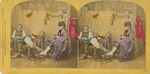
The stereograph contains a hand-colored image of a man fitting a woman for shoes as an older man and another women look on in the background. An older man sits on a chair in the background to the left, while a woman looks through a cutout in the small wall on the right. The image is on a yellow paper card mount, and its reverse contains documentary information.
-
Jealousy
Franklin G. Weller
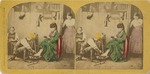
The stereograph contains a hand-colored image of a man fitting a woman for shoes as an older man and another woman looks on in the background. The older man sits in the background, while the second woman stands to the right of the image. The image appears on a yellow card paper mount and features documentary information on its reverse. The stereograph also has a crease down its middle.
-
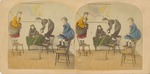
Just Before the Battle
Franklin G. Weller
The stereograph contains a hand-colored image of three girls standing on top of chairs and holding brooms while poking at a box on the floor. A fourth girl sits atop a table. The card's reverse includes documentary items. The image is on a peach-colored paper card mount.
-
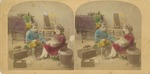
Stereoscopic Treasures: A Doubtful Case
Franklin G. Weller
The stereograph features a hand-colored image of a boy and girl playing. The girl holds a doll while the boy places a hand on the doll. The two appear to be playing doctor. The image is mounted on a cream card with rounded corners. Its reverse features publication and series information.
-
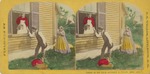
There Is No Rose without a Thorn
Franklin G. Weller
The stereograph contains a hand-colored image of a man standing outside a window holding the hand of a woman who stands indoors. Another woman stands behind the man with a broom in hand. The card's reverse features a handwritten inscription. The image is on a yellow-colored paper card mount.
-
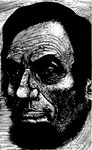
General Order No. 51.
Gideon Welles
The broadside contains an order penned by Gideon Welles announcing the death of President Abraham Lincoln and directing that a badge of mourning be worn for six months and that all flags be flown at half-mast. This particular copy is clean, but does have a light crease down its center.
-
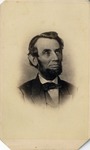
Abraham Lincoln, Engraving
Wenderoth and Taylor
Photograph of an engraving or lithograph of a bust portrait of Abraham Lincoln. The original photograph was taken by Wenderoth & Taylor at the White House in 1864. [Ref: O-96.]
-
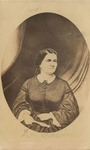
Mrs. Lincoln
Wenderoth and Taylor
Photo of a painting or print featuring a bust-length portrait of Mary Todd Lincoln. Probably after a photo by Wenderoth & Taylor. [Ref: ML, O-24.]
-
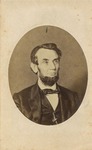
Wenderoth & Taylor Portrait of Abraham Lincoln
Wenderoth and Taylor
The carte-de-visite features a bust-length oval portrait of Abraham Lincoln taken by Wenderoth & Taylor. [Ref: O-95.]
-
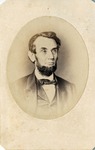
Wenderoth & Taylor White House Photograph of Abraham Lincoln
Wenderoth and Taylor
The carte de visite features a photograph taken by Wenderoth & Taylor in 1864. On 20 April 1865, Wenderoth, Taylor, and Brown published an advertisement in the Philadelphia Inquirer for the sell of card photographs featuring this image. [Ref: O-95.] The photograph features a seated Abraham Lincoln from the waist up. It is cut into an oval shape and affixed to a paper card.
-
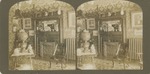
427 First St. Living Room. J. M. Wendt's Home
Julius M. Wendt
The stereograph features a black and white image of a living room. A chair and table stand in the foreground, while a fireplace and mantle make up the background. Various decor such as lamps, photographs, candlesticks, and other knickknacks are pictured. The image is mounted on a gray card with rounded corners. The card's reverse features publication and handwritten title information.
-
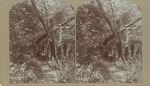
The Cycle Path
Julius M. Wendt and H. N. Beers
The stereograph contains a black and white image of a woman riding a bike along a wooded path. The image is on a gray paper card mount. The reverse side contains documentary information.
-
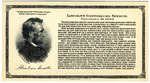
Lincoln's Gettysburg Speech November 19, 1863
Western Bank Note and Eng. Co.
The card is presumably a trade card distributed by the Western Bank Note & Eng. Co. It is an engraved card featuring a portrait of Abraham Lincoln and the text of the Gettysburg Address.
-
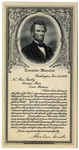
Lincoln's Mrs. Bixby Letter
Western Bank Note and Eng. Co.
The card is presumably a trade card distributed by the Western Bank Note & Eng. Co. It includes an engraving of a bust portrait of Abraham Lincoln along with the full text of the Bixby letter. The letter, rumored to have been written by Lincoln's private secretary John Hay, was written in 1864 to offer condolences to widow Lydia Parker Bixby, who claimed to have lost five sons during the American Civil War.
-
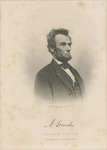
Portrait of Abraham Lincoln, President of the United States
Western Engraving Co. Chicago
A black and white engraving of a portrait of Abraham Lincoln. The image has some slight foxing on front and back. It was originally enclosed in a frame with another print (inventory #6982), but was removed for preservation.
-
Lincoln’s Monument at Pacific Park in Long Beach, California
Western Publishing & Novelty Company
This postcard features the Abraham Lincoln statue in Long Beach, California.
-
Advertisement for Jaques Barzun’s Lincoln the Literary Genius
Herbert West and Jacques Barzun
Bifold advertisement for Jaques Barzun’s Lincoln the Literary Genius. The advertisement is from Herbert West, Bookseller. The front of the advertisement features a portrait of Abraham Lincoln.
-
A Lawyer's Time and Advice are His Stock in Trade
West Publishing Co.
The black and white print depicts a silhouette of Abraham Lincoln's side profile. It is accompanied by a quotation attributed to Abraham Lincoln. The print was originally enclosed in a frame, but was removed for preservation.
-
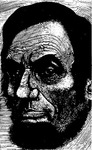
Abraham Lincoln Oval Portrait
Wheat Studio
The discolored white paper mat contains a gelatin silver print of a portrait of Abraham Lincoln. Lincoln looks to his proper right. The photo exhibits silver mirroring.
-
Lincoln Log Cabin Bottle Syrup
Whetstone Ledges Farm
The object is a bottle molded into the shape of Abraham Lincoln's log cabin. It has a sealed plastic top. On one side, a gold label appears that contains product information. The bottle is filled with maple syrup.