
Books, magazines, reports, and other long publications produced by faculty, staff, and students affiliated with Mississippi State University's College of Agriculture and Life Sciences.
-
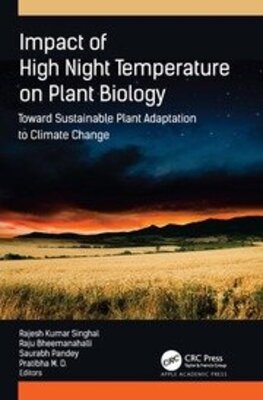
Impact of High Night Temperature on Plant Biology: Toward Sustainable Plant Adaptation to Climate Change
Rajesh Kumar Singhal, Raju Bheemanahalli, Saurabh Pandey, and M. D. Pratibha
The persistence of higher night-time temperatures (HNT) over long periods during the crop cycle can potentially impact a wide range of growth and developmental stages. The major processes drastically affected by night-time warming, such as photosynthesis, respiration, etc., ultimately cause yield and economic losses. Despite this, HNT has not been significantly researched regarding its impact on plants. This new book provides a comprehensive understanding of the physiology of night-time warming, trait responses, advanced tools for phenotyping, and alleviation and mitigation strategies.
-
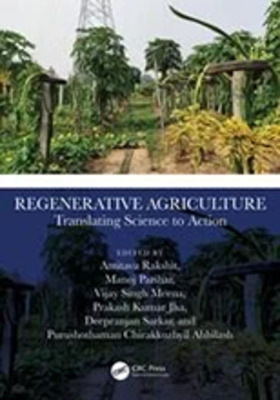
Regenerative Agriculture: Translating Science to Action
Amitava Rakshit, Manoj Parihar, Vijay Singh Meena, Purushothaman Abhilash, Prakash Kumar Jha, and Deepranjan Sarkar
This book aims to focus on the current state of knowledge and scientific advances about the complex and intertwined issues of regenerative farming as a transformative solution for offsetting the disastrous climate effects of burning fossil fuels and impairments of natural resource bases. Regenerative agriculture advocates no-till practices, planting cover crops, integrating livestock and crop production, improving animal welfare practices, improving the social and economic well-being of communities, sequestering carbon, improving soil health, and increasing yields and profit with a positive impact on food access or food safety regardless of farm size.
This book examines the innovations that will equip agriculture to cope with the competing challenges of addressing food and nutrition security, improving livelihoods, combatting climate change, and sustainably managing natural resources. The scope of this book extends to agricultural scientists, students, consultants, site owners, industrial stakeholders, regulators, and policymakers.
-

Public Health Entomology
Jerome Goddard
In the struggle against vector-borne diseases, it is critical that we bridge the gap among vector control workers on the ground (practitioners), public health planners and administrators, and (academic) medical entomologists. This second edition of Public Health Entomology is designed to fit certificate courses in public health entomology offered by universities and U.S. Centers of Excellence. It comprehensively examines vector-borne disease prevention, surveillance, and control from a governmental and public health perspective with worldwide application. Divided into two sections, the book begins with a historical account of the early beginnings of pest control and public health. Next, it outlines the concepts, design, and implementation of a sound public health entomology program, including issues associated with pesticide use, FEMA and other disaster response entities, and an adverse, chemophobic public. The second section provides an overview of some of the most common public health pests that are found globally. Copious photos and line drawings accentuate the text, along with text boxes and sidebars. The new edition addresses "IPM and Alternative Control Methods" in each section, expands the Lyme disease section, and includes other new and emerging tick-borne diseases (TBD). It provides enhanced discussion of working with local political figures and jurisdictions, as well as partnerships with academia, and is generally more worldwide in scope. Author Jerome Goddard designed and implemented the vector control program along the Mississippi Gulf Coast after Hurricane Katrina. His ability to communicate his knowledge and experience to public health students, professionals, and the general public make this book an essential resource for preventing disease from these vector-borne threats.
-
Precision Agriculture GIS Technologies for Mississippi, 1st. Edition
Amelia A.A. Fox
Precision agriculture is meant to improve on-farm efficiency in hopes of ultimately increasing profitability while also protecting the environment. However, this difficult process almost always includes the proper management and interpretation of data. Therefore, it is imperative that those individuals involved in making such decisions are educated on these processes. In a data-driven world, this textbook is a great resource for those wanting to learn how to utilize their data in hopes of making better informed on-farm decisions.
-
Physician’s Guide to Arthropods of Medical Importance
Jerome Goddard
Designed to help clinicians identify various arthropods and to trace the signs and symptoms of vector-borne diseases to their sources, the text also details currently recommended forms of treatment. The volume begins by describing the pathologic conditions caused by arthropods and the principles of treating those conditions. It elucidates the rationale behind the various treatment regimes and the underlying principles of controlling the immune response. It covers identification of arthropods and common signs and symptoms of vector-borne disease. The book then provides an alphabetical arrangement of arthropods of medical importance with clearly marked subheadings for easy information.